
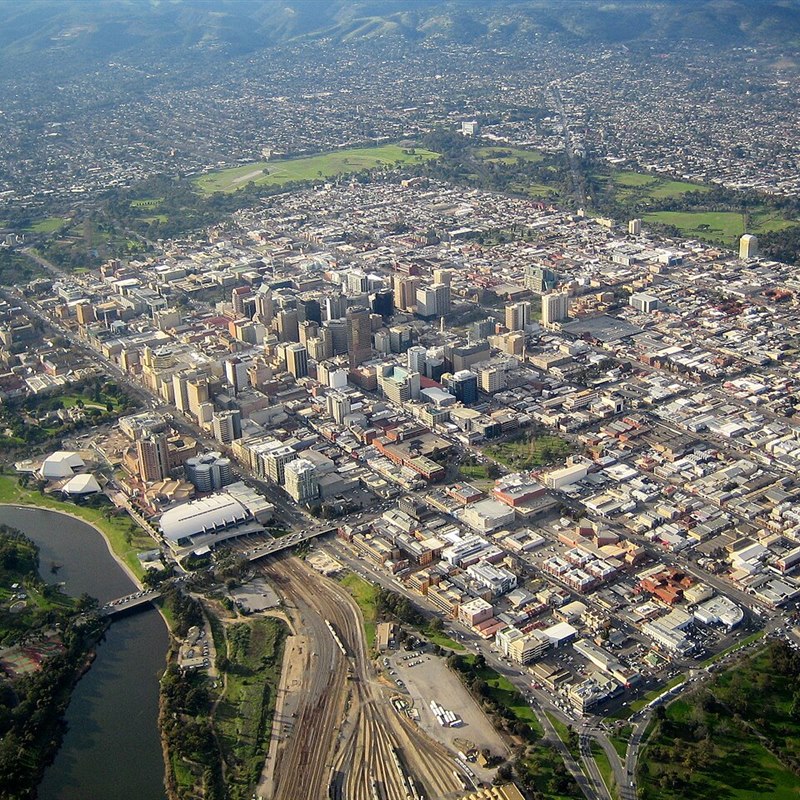
Here is a piece of the immigration system that sounds like a mistake and is not. For skilled migration purposes, Adelaide is regional Australia. The whole of South Australia is. Which means a city of one and a half million people, with a university sector, a defence industry, hospitals and an international airport, carries the same visa concessions as a town of four thousand.
If your points total is not competitive in Sydney or Melbourne, that quirk is the most valuable thing anyone can tell you, and it is worth more than the other nine items on this list put together.
1. Adelaide counts as regional, and that changes everything
Regional Australia is defined as everywhere except Sydney, Melbourne and Brisbane. Adelaide sits in Category 2, the cities and major regional centres group, alongside Perth, Canberra, Hobart, Newcastle, Wollongong, Geelong and the Queensland coast.
Practically, that unlocks the Skilled Work Regional visa (subclass 491) with its extra 15 points for nomination, which is frequently the difference between an invitation and years of waiting. The 491 runs for five years, and after three years of living and working in the designated area you can apply for permanent residency through the subclass 191. It also opens regional occupation lists, which are broader than the general ones.
Fifteen points is an enormous swing in a system where people spend years chasing five through another English test or an extra year of experience.
2. South Australia nominates at levels the big states do not
On top of the regional concession, South Australia has historically been one of the more accessible states to be nominated by, running both 190 and 491 programmes and inviting at lower points thresholds than New South Wales or Victoria. Healthcare, construction and agriculture occupations have tended to do particularly well.
Stack the two advantages together and an applicant who is nowhere near competitive for a Sydney nomination can be a realistic candidate in Adelaide. That is not a loophole, it is the policy working exactly as intended, because the entire point is to direct skilled arrivals somewhere other than the two largest cities.
Check the current occupation lists and rounds before planning around any of this, because state programmes change every year and the settings move.
3. Rent is genuinely cheaper, and genuinely hard to find
Renting in Adelaide works out roughly 38 per cent cheaper than Sydney, and housing and dining generally run 20 to 30 per cent below Sydney prices. A one bedroom flat in a mid range suburb sits somewhere around $700 to $900 a month, with three bedroom houses starting near $1,200 to $1,500.
Then comes the catch. Adelaide’s vacancy rate is about 0.7 per cent, the tightest of the major capitals, in a market where 3 per cent is considered balanced. Cheap does not mean available. What it does mean is that rent growth here has been the slowest of the big five at roughly 4.8 per cent for the year, so the pressure shows up as scarcity rather than as price rises, which is a meaningfully different problem to solve.
Expect to compete hard for a well priced property and to win it at a rent that will not shock you.
4. Buying is not the bargain it used to be
This is the part where Adelaide’s reputation has fallen furthest behind reality. The median dwelling now sits around $945,868, roughly $137,000 above the Melbourne equivalent. Adelaide, the city Australians have always described as the affordable one, has quietly become more expensive to buy into than the country’s second largest city.
The rental gap is real, so the affordability case for moving here still stands if you are renting. The purchase case has largely evaporated, and anyone arriving with a plan to buy within a couple of years should build their budget on current figures rather than on what a relative told them Adelaide costs.
5. What a week costs
A comfortable single lifestyle in Adelaide runs to roughly $4,844 a month, or about $58,000 to $62,000 a year after tax. That figure buys noticeably more here than the same money does in Sydney, and the difference is almost entirely housing rather than groceries or utilities, which cost much the same nationwide.
The honest counterweight is that Adelaide salaries are lower too. Run the comparison on your own occupation using actual advertised roles rather than assuming the cost saving lands in your pocket, because in some fields it does and in others it does not.
6. The job market is the real trade
This is the thing to be clear eyed about. Adelaide’s economy is smaller and narrower than the eastern capitals, with real strength in defence, shipbuilding, health, education, agriculture and wine, and considerably less depth in finance, media, technology and corporate head office work.
If your field is on the strong list, Adelaide can be the best decision available to you: easier visa, cheaper rent, twenty minute commute. If your field is not, you may find there are three employers in the whole state who need what you do, and that changes your negotiating position considerably. Search the actual job boards for your actual job title before committing to anything.
7. Three months to convert your licence
As in most states, permanent residents get three months to convert an overseas licence to a South Australian one. Drivers from recognised countries generally swap on paperwork, everyone else should plan for testing, and either way it is a first month job rather than a later one.
You will want the licence, incidentally. Adelaide’s public transport is adequate rather than good, and this is a city where most households run a car without apology.
8. Dry heat, and the lowest humidity in the country

.jpg)
Adelaide has a Mediterranean climate and the lowest humidity of any Australian capital, which means the heat behaves completely differently to Brisbane’s or Sydney’s. Summer sits between about 16 and 29 degrees and regularly pushes past 40 in a heatwave, but it is dry heat, and shade genuinely helps in a way it does not on the humid east coast.
Those 40 degree stretches are not a rounding error, though. They arrive several times each summer, they last for days, and they are the reason air conditioning and decent window coverings should be on your list when inspecting a property. Winters are cool, grey and wet in the European manner, and shorter than Melbourne’s.
9. The city was planned, and you feel it every day
Adelaide’s centre is a square mile grid ringed entirely by parklands, laid out deliberately in 1837 and never allowed to sprawl into itself. The practical result is a city that is genuinely easy to understand within a week, where the streets run in a logical order and where green space is never more than a short walk away.
It also produces the commute times Adelaide people are quietly smug about. Twenty to thirty minutes is normal, from suburbs that in Sydney would be an hour and a half out. Add the wine regions, with the Barossa about an hour away and McLaren Vale closer, and beaches like Glenelg reachable by tram, and the geography does a lot of the work in making life here pleasant.
10. Who Adelaide actually suits
It suits people whose visa arithmetic does not work anywhere else, and there is no shame whatsoever in that being the reason you come. Plenty of families have built excellent Australian lives starting from precisely that calculation.
It suits people who would rather have their time than their options. A twenty minute commute returns something like ten hours a week compared with an outer Sydney one, and that is a genuine and permanent upgrade to a life rather than a lifestyle slogan.
It suits you less if you need a deep specialised job market, or if you want the kind of city where something is always happening at eleven on a Tuesday. Adelaide is calmer than that, and people who need noise tend to notice within the first year.
One last piece of practical advice. Because the 491 requires you to live and work in the designated area for three years before permanent residency, treat Adelaide as somewhere you are genuinely moving to rather than a waiting room for Melbourne. The people who arrive counting down are usually the ones who have a miserable time. The ones who unpack properly tend to stay. Worth comparing against Melbourne and Sydney before you decide, with the visa advantage weighted properly.
Featured image: Adelaide from the air by Doug Barber, CC BY-SA 3.0.

Leave a Reply