
Turn up to an open inspection for a half decent two bedroom flat in Brunswick and you will probably be standing on the footpath with twenty other people, all holding the same folder of payslips and all trying to look like the easiest tenant in the queue. Nobody puts that in the brochure. They tell you about the coffee and the laneways, about watching cricket in February and football in May, and all of it is true. The queueing is true as well.
Melbourne added more new residents last year than any other Australian city, and on current trends it overtakes Sydney around 2032. Which means a very large number of people are working through exactly the same list you are about to work through. Here is what I would tell a friend who had just accepted a job here and had about three months to get organised.
1. Your visa shapes more than your postcode
Victoria nominates skilled migrants through two main streams, and the gap between them follows you for years. The Skilled Nominated visa (subclass 190) is permanent and lets you live anywhere in the state, Melbourne included. The Skilled Work Regional visa (subclass 491) is provisional, runs for five years, and asks you to live and work in regional Victoria for at least three of them before a permanent pathway opens up. Regional does not mean the outback here. It does mean you cannot quietly settle in Carlton and commute.
You need at least 65 points including the nomination itself, though that figure is close to meaningless in isolation. For some trade occupations 65 will genuinely get you across the line. For nursing, teaching and community services, realistic applicants are sitting at 80 and above. The 2025-26 program ran 2,700 places for the 190 and 700 for the 491, which tells you plenty about the competition. One detail catches people repeatedly: if you are already onshore, Victoria will only select you if you are living in Victoria, so applying from a share house in Sydney is a wasted form. Check the current round before you build a plan around any of these numbers, because the 2026-27 program had not opened at the time of writing.
2. Renting will be the hardest part of the move
The median asking rent for a Melbourne house reached a record $600 a week in the June quarter of 2026. Vacancy sits somewhere between 1.2 and 2.5 per cent depending on whose data you trust, against roughly 3 per cent for what anyone would call a balanced market. The outer suburbs have tightened to about 1.8 per cent, which blindsides people who assume that moving further from the city buys them less competition.
Your specific problem as a new arrival is that you have no Australian rental history and no local references, and the agent has forty applications for one property. Get ahead of it. Write a short cover letter explaining who you are and why you are here, gather references from an employer or a university rather than a previous landlord you do not have, and keep digital copies of your identity documents, visa grant and proof of income in one folder so you can apply the same afternoon you inspect. Speed genuinely matters.
On the bond, two things are worth knowing. For any property renting at $900 a week or less, the bond is capped at one month’s rent. And it does not go to the agent; it goes to the Residential Tenancies Bond Authority, a government body that holds the money independently until your tenancy ends, with confirmation reaching you inside a fortnight. Photograph every room the day you get the keys, scuffs and stains included. Fair wear and tear is not something a rental provider can bill you for, and VCAT is there to settle it when someone tries.
3. What a week here actually costs
A single person needs somewhere around $925 to $1,155 a week to live comfortably in Melbourne in 2026. A couple lands closer to $1,270 to $1,615, and a family of four somewhere near $1,850 to $2,195. Housing swallows the largest share by a distance, which is why the rental section came first.
The rest is more predictable than people fear. Groceries run about $150 to $200 a week for one person and $300 to $400 for a family of four. Electricity is regulated through the Victorian Default Offer, benchmarked at roughly $1,591 a year for 2026-27, so call it $31 a week and adjust for how cold you like your house in July. Melbourne comes in around 12 to 15 per cent cheaper than Sydney overall, with rents 25 to 30 per cent lower, and that gap is real rather than marketing. It is also not a windfall, so please do not budget as though it is.
4. Medicare is not automatic, and the ambulance is not free
Arrive on a permanent visa and you can enrol in Medicare from the day you land. Most Services Australia centres will issue your number over the counter, with the physical card following by post in three to four weeks. Do this early, because that number unlocks bulk billed appointments and subsidised medicines.
Temporary visa holders are in a different position. You generally cannot enrol unless your home country holds a Reciprocal Health Care Agreement with Australia, and there are only eleven of those: the United Kingdom, New Zealand, Ireland, Belgium, Finland, Italy, Malta, the Netherlands, Norway, Slovenia and Sweden. Even then the cover varies by country, and visitors from New Zealand and Ireland are limited to public hospital treatment and subsidised medicines rather than the full schedule of services.
None of these arrangements cover dental, optical, elective procedures or ambulance transport. That last one deserves its own sentence, because an ambulance in Victoria is a billable service and a single trip is not cheap. Ambulance cover is inexpensive, the alternative is not, and sorting it in your first week is one of those small administrative acts you will be quietly grateful for later.
5. The six month clock on your driver licence
If you intend to live in Victoria for longer than six months, your overseas licence has to become a Victorian one. The clock starts the day you begin living here, not the day you decide to stay, and popping home for a wedding does not reset it. You have to attend a VicRoads customer service centre in person, bringing your licence, proof of identity, proof of a Victorian address and a certified translation if the licence is not in English.
Whether you sit a driving test depends on where the licence was issued, how long you have held it and how old you were when you got it. Drivers from countries with recognition agreements are frequently converted without a test. Everyone else should assume they will need one and book early, because appointment waits are not short and driving on an expired entitlement is a problem you do not want in a new country.
6. Your address quietly picks your child’s school
Every Victorian government school has a designated neighbourhood zone, and every child has a legislated right to enrol at the school for the zone they live in. For families in metropolitan Melbourne, that school is usually the nearest government school measured as a straight line from your permanent address. Straight line, not driving distance, which produces some genuinely strange outcomes once a freeway or a railway line sits between you and the school on the map.
You can enrol outside your zone, but only where the school has room and its enrolment plan allows it, and the popular ones rarely do. The state publishes every boundary at findmyschool.vic.gov.au. Spend twenty minutes there before you sign a twelve month lease rather than after, because the zone is one of the few things about your new life that you cannot negotiate later.
7. Public transport is good, and right now it is half price


Trains, trams and buses all run on one card called a Myki, which you tap on and, depending on the mode, tap off again. A two hour full fare across zones 1 and 2 normally costs $5.70 with a daily cap of $11.40. Except that fares across Victoria are running at half price from 1 June 2026 until 1 January 2027, which pulls the full fare daily cap down to $5.70 and the concession cap to $2.85. Anyone under 18 travels free, statewide.
There is also a Free Tram Zone covering the CBD grid, Docklands and a thin slice of Carlton. If your entire tram trip stays inside the boundary you do not touch on at all, and touching on can actually charge you for a journey that should have cost nothing. Cross the boundary and the normal rules resume immediately, which is precisely where newcomers and tourists get stung.
8. The weather is not bad, it is indecisive
Melbourne winters are not cold the way northern hemisphere winters are cold. July, the coldest month, averages a high near 14.7 degrees and lows around 6.5. What wears people down is the grey and the damp rather than the thermometer, and the fact that it arrives in June and does not properly leave until September.
Summer offers the opposite surprise. The city can push past 35 degrees, and then a cool change sweeps up from the south west and strips ten degrees off in a couple of hours, often dragging heavy rain behind it. The four seasons in one day line is repeated so often because it keeps being accurate. Wear layers, keep a jacket in the car, and quietly stop trusting the forecast you read over breakfast.
9. The city is growing faster than almost anywhere in the country


Greater Melbourne holds roughly 5.3 million people and grew by about 142,600 in a single year, the largest increase recorded anywhere in Australia. Close to 90 per cent of the growth across Australian capitals now comes from overseas migration. Keep that trajectory going and Melbourne becomes the country’s largest city somewhere around 2032.
That single statistic explains most of the rest of this list. It is why the rental market bites, why the outer suburbs are filling as fast as the inner ones, why there are cranes over half the inner north. It cuts the other way too. A city absorbing that many arrivals is thoroughly used to newcomers, so nobody will treat you as a curiosity, and nobody will hold your hand either. You are expected to get on with it, which is either liberating or lonely depending on the week.
10. It takes about a year to feel like yours

.jpg)
Melbourne is not one city so much as forty small ones stitched loosely together. Footscray does not feel like Brighton. Box Hill does not feel like either of them, and Preston is a different proposition again from the Preston of ten years ago. This is the real reason people struggle in their first six months. You arrive, you take whichever lease you could actually win, and then you judge the entire place on the strength of one suburb you chose under pressure.
So give it a year before you decide. Join something with a fixed weekly time, a sports club or a choir or a community garden, because adult friendships here are built through repetition rather than charm. It matters more than usual at the moment: national unemployment sat at 4.4 per cent in May 2026 and conditions have been loosening from an unusually tight starting point, so a job search can run longer than it would have two years ago. A slow search is much easier to survive when you already know some people.
Here is the thing about the list above. All of it is finite. You will sort the licence and the Medicare card, you will learn which side of the tram to get off on, you will find out that the school zone runs down the middle of your street. And then one Saturday you will be walking back from the market with a coffee you ordered without thinking about how to order it, and it will occur to you that you have stopped counting how long you have been here. That is the part worth planning for. Everything else is just clearing the road.
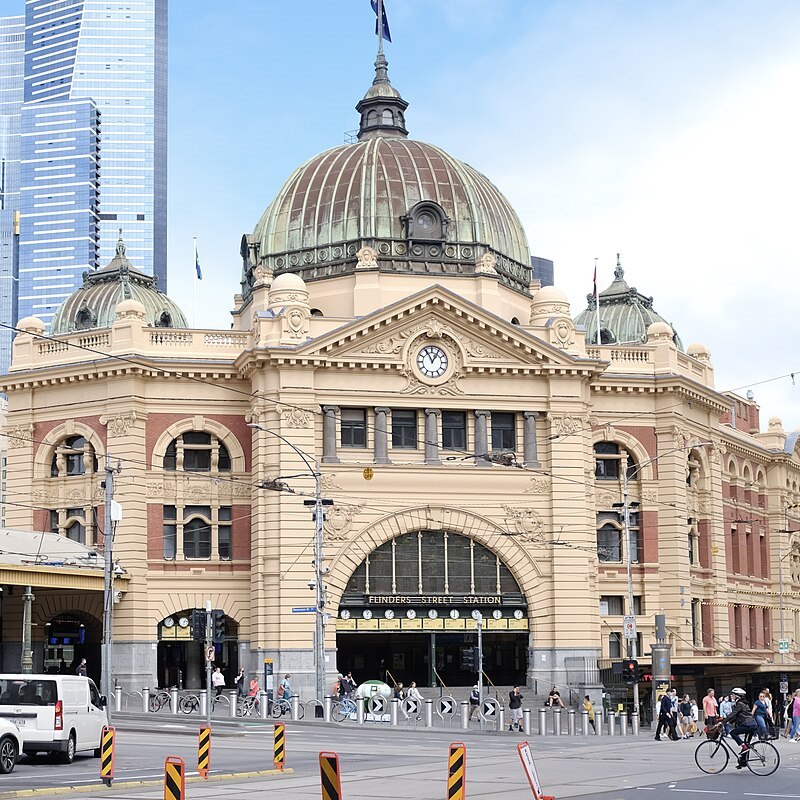
Featured image: Flinders Street Station by Gracchus250, CC BY-SA 4.0.

Leave a Reply